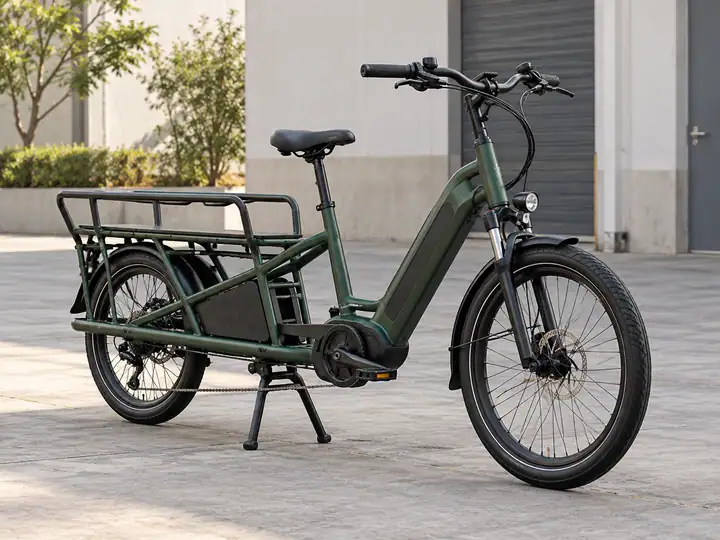
Local delivery
Review load shape, stops, route conditions and destination rules.
For selected short-distance operations, the vehicle decision begins with what is carried, route length, surface and schedule.
A fleet discussion also needs charging, storage, maintenance and responsible operators—not only motor specifications.
Review load shape, stops, route conditions and destination rules.
Consider distance between locations, parking and daily operating routines.
Identify cargo fixtures, storage, battery management and rider requirements.
Cargo configurations may be worth reviewing for load-carrying tasks; other formats may fit light staff travel.
Payload capacity, battery choice, compliance and operating permissions must be verified for the specific model and market.
Share the planned use, destination, trip patterns, goods or riders, and known constraints.
A discussion can then identify suitable reference configurations, customization questions and the information needed for a commercial review.
A preliminary use case is enough to begin; model and quantity can follow.